THE JOINT DETERMINATION OF HOUSEHOLD MEMBERSHIP AND MARKET WORK - THE CASE OF YOUNG MEN
Date
1985
Authors
Journal Title
Journal ISSN
Volume Title
Repository Usage Stats
views
downloads
Citation Stats
Abstract
Type
Department
Description
Provenance
Subjects
Citation
Permalink
Published Version (Please cite this version)
Publication Info
McElroy, Marjorie B (1985). THE JOINT DETERMINATION OF HOUSEHOLD MEMBERSHIP AND MARKET WORK - THE CASE OF YOUNG MEN. JOURNAL OF LABOR ECONOMICS, 3(3). pp. 293–316. 10.1086/298057 Retrieved from https://hdl.handle.net/10161/2585.
This is constructed from limited available data and may be imprecise. To cite this article, please review & use the official citation provided by the journal.
Collections
Scholars@Duke
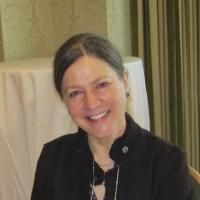
Marjorie B. McElroy
Professor McElroy focuses her research on the subjects of labor, demand systems, and financial economics. She has completed several of her research projects under the funding provided by National Science Foundation grants, including her latest work on the economics of the family in relation to bargain decision-making and marriage markets. She is also currently investigating altruism in marriage markets and bargaining on the core in marriage markets. She has also completed studies involving the investigation of international populations, such as her work with D. Yang on, “Carrots and Sticks: Fertility Effects on China’s Population Policies.” She has collaborated with her contemporaries on several projects, including her earlier work with Hwei-ju Chen, R. Gnanadesikan, and J.R. Kettenring entitled, “A Statistical Study of Groupings of Corporations,” and her project with T.J. Kniesner and Stephen Wilcox on, “Family Structure, Race, and the Feminization of Poverty.” One of her recent published studies, which she completed independently, is entitled, “What’s New with Nash-Bargained Household Demands?”

Unless otherwise indicated, scholarly articles published by Duke faculty members are made available here with a CC-BY-NC (Creative Commons Attribution Non-Commercial) license, as enabled by the Duke Open Access Policy. If you wish to use the materials in ways not already permitted under CC-BY-NC, please consult the copyright owner. Other materials are made available here through the author’s grant of a non-exclusive license to make their work openly accessible.