Remembering Suḥaym: The Tragic Fate of Arabia's First African-Born Poet
Date
2025-04-30
Authors
Journal Title
Journal ISSN
Volume Title
Repository Usage Stats
views
downloads
Attention Stats
Abstract
One of the most overlooked figures in African diaspora studies is Suḥaym ʿAbd Banī Ḥassḥās (Suḥaym, the slave of the Ḥassḥās clan). His neglect arises from several factors: the general neglect of critical archival research on the African diaspora in Arabia, the unconventional life Suḥaym led, and his personal indifference to Islam. His poetry, which chronicles defiance during the formative years of Arab nationalism following the rise of Islam, challenged the patriarchal chauvinism of his enslavers and resisted erasure by the cultural elite. However, his execution by immolation highlights the violent limits of tolerance in a culture that celebrated his art while undermining his humanity.
Type
Department
Description
Provenance
Subjects
Citation
Permalink
Collections
Scholars@Duke
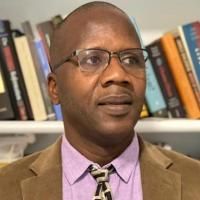
Mbaye Lo
Mbaye Lo is a professor of the practice of Asian and Middle Eastern studies and international comparative studies at Duke University. Originally from Senegal, Lo completed his undergraduate and graduate training in classical Arabic language and literature at the International University of Africa, Khartoum, and the Khartoum International Institute for Arabic Language, Sudan. He also received an MA in American history from Cleveland State University, where he also earned his PhD from the Maxine Goodman Levin College of Urban Affairs with a dissertation on Re-inventing Civil Society-Based Governance in Africa: Theories and Practices.
Professor Lo is a recipient of several awards including the National Humanities Center fellowship, the American Council of Learned Societies Fellowship on Luce/ACLS Program in Religion, Journalism & International Affairs, DukeEngage Program Director Award, and Duke University Alumni Distinguished Undergraduate Teaching Award.Professor Lo is the author and editor of nine books in both English and Arabic that examine the intersection of intellectual and social discourse of Arabic/Islamic and African cultures. He has written widely on political Islam, Arabic literary traditions in West Africa, and ideas of civil society and governance.

Unless otherwise indicated, scholarly articles published by Duke faculty members are made available here with a CC-BY-NC (Creative Commons Attribution Non-Commercial) license, as enabled by the Duke Open Access Policy. If you wish to use the materials in ways not already permitted under CC-BY-NC, please consult the copyright owner. Other materials are made available here through the author’s grant of a non-exclusive license to make their work openly accessible.