Burqa in Vogue: Fashioning Afghanistan
Date
2009-12
Authors
Journal Title
Journal ISSN
Volume Title
Repository Usage Stats
views
downloads
Attention Stats
Abstract
Type
Department
Description
Provenance
Subjects
Citation
Permalink
Collections
Endorsement
Review
Supplemented By
Referenced By
Scholars@Duke
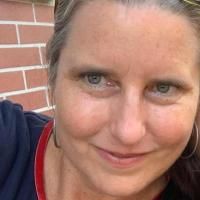
Ellen McLarney
After college, I joined the Peace Corps in Morocco where I volunteered as a teacher for two years. The experience was life changing and led me on the path I am on now, over thirty years later. I was inspired to join the Peace Corps by a class on African literature in French that I took my senior year in high school. The teacher—who had been a Peace Corps volunteer in Ghana—taught us works like Léopold Senghor’s Chants d’ombre (1945), Ousmane Sembène’s Les Bouts de bois de Dieu (1960), Ahmadou Kourouma’s Les Soleils des indépendances (1968), and Mariama Bâ’s Une si longue lettre (1979). When I went to college at Brown University, I continued these studies with a concentration in comparative literature, participating in the landmark 1992 congress of the International Writers Project featuring Nobel laureate Wole Soyinka as keynote. In the Peace Corps, I devoted myself to learning Moroccan Arabic fluently, teaching language and literature, and assimilating in my local community—reading the Qur’an and fasting Ramadan for the first time. In graduate school, I sought to deepen and formalize my knowledge of Islam, the Arabic language, and Arabic, Islamic, and African literatures with mentors like Magda al-Nawahi, Muhsin al-Musawi, Edward Said, and Maryse Condé.
I’m a native of Kansas City, MO. My father grew up on a farm without indoor plumbing or electricity and attended a school that had eight grades in one room, most of them his cousins. My Irish ancestors migrated to rural Missouri in the mid-19th century in the wake of the potato famine. My study of languages and literature, alongside my commitments to community involvement, significantly expanded my world and mind and honestly, my family’s, too. During my PhD at Columbia University, I studied intensive advanced Arabic for a year in Cairo (with the CASA program), lived with a Palestinian Christian family in Jerusalem’s old city (on عقبة البطيخ), traveled alone to Damascus and Aleppo, and conducted my dissertation research in Tunisia on a Fulbright. But in New York City, I came into contact with another kind of Muslim community that lived all around me at the edge of Harlem—something that became part of my education in Islamic studies and the many varieties of Muslim communities in the world. These experiences directly informed the development of my scholarship: my first book Soft Force (Princeton, 2015) on Egyptian women’s writings about the liberatory potential of Islamic thought and my second book Black Arts, Black Muslims (Columbia, 2026) about Muslim cultural production in the Black Arts Movement.
My work focuses on the power of the pen, rather than the sword. I finished my PhD just after 9/11 and the emphasis all along has been on conflict, violence, war, extremism, and intolerance. My writing and teaching explore the varied cultural dimensions of centuries of Islamic literature, poetry, visual art, and music—so often obscured in American popular consciousness and also, in high school and college curricula. I concentrate on writers oftentimes not taken seriously as theorists of Islam, though they engage the Islamic tradition with utter sincerity. I look at how they interpret—and reinterpret—the Islamic intellectual tradition hoping to envision a better society and what justice might look like in local contexts, whether gendered or racial.
At Duke, this has also meant engagement in the local community alongside my scholarship. When I first came to Duke, I spearheaded a project "Local Islams" funded by grants from Harvard's Pluralism Project and the Kenan Institute for Ethics. The project included a service learning course where students volunteered on different projects in local Muslim communities—including the al-Iman school in Raleigh. One of the major initiatives connected to the project was the establishment in 2007 of the Mariam Clinic in Raleigh, a health care organization providing services to uninsured individuals. One of the students in the class became the clinic's first director.
Later, as Director of the Duke Middle East Center and the Duke Islamic Studies Center (2019-22), I organized numerous trainings for K-12 teachers; helped lead a six year project on Muslims in America featuring musicians, poets, filmmakers, and artists working closely with the public schools and community organizations (like Girls Rock and Rofhiwa Book Café); and organized an initiative “Islam and Racial Justice in the American South” with my colleague Professor Mbaye Lo that illustrated the deep roots of local Muslim communities. My aim has been to foster literacy about Muslim communities across the world, but also about neighbors and fellow Americans living just down the street.

Unless otherwise indicated, scholarly articles published by Duke faculty members are made available here with a CC-BY-NC (Creative Commons Attribution Non-Commercial) license, as enabled by the Duke Open Access Policy. If you wish to use the materials in ways not already permitted under CC-BY-NC, please consult the copyright owner. Other materials are made available here through the author’s grant of a non-exclusive license to make their work openly accessible.