Measurement of scintillation response of CsI[Na] to low-energy nuclear recoils by COHERENT
Journal Title
Journal ISSN
Volume Title
Attention Stats
Abstract
We present results of several measurements of CsI[Na] scintillation response to 3-60 keV energy nuclear recoils performed by the COHERENT collaboration using tagged neutron elastic scattering experiments and an endpoint technique. Earlier results, used to estimate the coherent elastic neutrino-nucleus scattering (CEvNS) event rate for the first observation of this process achieved by COHERENT at the Spallation Neutron Source (SNS), have been reassessed. We discuss corrections for the identified systematic effects and update the respective uncertainty values. The impact of updated results on future precision tests of CEvNS is estimated. We scrutinize potential systematic effects that could affect each measurement. In particular we confirm the response of the H11934-200 Hamamatsu photomultiplier tube (PMT) used for the measurements presented in this study to be linear in the relevant signal scale region.
Type
Department
Description
Provenance
Subjects
Citation
Permalink
Collections
Endorsement
Review
Supplemented By
Referenced By
Scholars@Duke
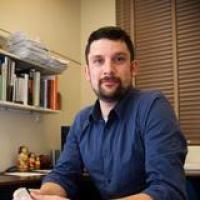
Phillip S. Barbeau
Professor Barbeau’s research interests are predominantly in the fields of neutrino and astroparticle physics. His efforts are focused on (but not limited to) three major areas of research: studying the physics of coherent neutrino-nucleus scattering; novel searches for the dark matter in our universe; and searches for zero neutrino double beta decay. The unifying aspect of the work is the common need for new and creative detector development in order to solve some of the “hard” problems in low-background rare-event detection.
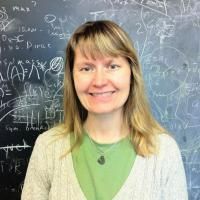
Kate Scholberg
Prof. Scholberg's broad research interests include experimental elementary particle physics, astrophysics and cosmology. Her main specific interests are in neutrino physics. She has long-term involvement in Super-Kamiokande in Japan and the T2K ("Tokai to Kamioka") high-intensity beam experiment that sends neutrinos 300 km from an accelerator at the J-PARC facility in Japan to Super-K. She is a member of DUNE (Deep Underground Neutrino Experiment), the next-generation U.S.-based international experiment designed to observe neutrinos beamed from Fermilab to a large liquid argon detector at an underground facility in South Dakota. One of Prof. Scholberg's particular interests on DUNE is the detector's sensitivity to the huge bursts of neutrinos from core-collapse supernovae.
Prof. Scholberg serves as spokesperson of COHERENT, a multi-detector experiment with the primary physics goal of measuring CEvNS (Coherent Elastic Neutrino Nucleus Scattering) using the high-quality, high-intensity neutrinos produced by the Spallation Neutron Source at Oak Ridge National Laboratory in Tennessee. CEvNS is the interaction of a neutrino with an entire nucleus, resulting in a very tiny nuclear recoil. CEvNS was measured for the first time by the collaboration in 2017. COHERENT is currently engaged in multiple measurements of CEvNS on different nuclear targets, as well as a broad program of neutrino interaction measurements and beyond-the-standard-model physics searches.
Prof. Scholberg was a co-founder of SNEWS, the SuperNova Early Warning System, an inter-experiment collaboration of detectors with Galactic supernova sensitivity. Neutrinos from a core collapse will precede the photon signal by hours; therefore coincident observation of a burst in several neutrino detectors will be a robust early warning of a visible supernova. The goals of SNEWS are to provide the astronomical community with a prompt alert of a Galactic core collapse, as well as to optimize global sensitivity to supernova neutrino physics.

Unless otherwise indicated, scholarly articles published by Duke faculty members are made available here with a CC-BY-NC (Creative Commons Attribution Non-Commercial) license, as enabled by the Duke Open Access Policy. If you wish to use the materials in ways not already permitted under CC-BY-NC, please consult the copyright owner. Other materials are made available here through the author’s grant of a non-exclusive license to make their work openly accessible.