African American professionals in higher education: experiencing and coping with racial microaggressions
Date
2020-07-03
Journal Title
Journal ISSN
Volume Title
Repository Usage Stats
views
downloads
Citation Stats
Abstract
Using a Critical Race Theory lens, we explored how African American professionals in both HBCUs and PWIs (4-year and 2-year institutions) experienced and coped with racial microaggressions. The participants in this study included fifteen African American instructors/professors and administrators. Despite the type of institution, the emerged themes from interviews indicated that participants experienced an array of racial microaggressions. In addition, many participants addressed race-related stress experienced in the workplace by engaging in both adaptive and maladaptive coping strategies. Implications are provided to discuss the impact that racial microaggressions has on African Americans in the higher education workplace.
Type
Department
Description
Provenance
Subjects
Citation
Permalink
Published Version (Please cite this version)
Publication Info
DeCuir-Gunby, JT, OT Johnson, C Womble Edwards, WN McCoy and AM White (2020). African American professionals in higher education: experiencing and coping with racial microaggressions. Race Ethnicity and Education, 23(4). pp. 492–508. 10.1080/13613324.2019.1579706 Retrieved from https://hdl.handle.net/10161/24192.
This is constructed from limited available data and may be imprecise. To cite this article, please review & use the official citation provided by the journal.
Collections
Scholars@Duke
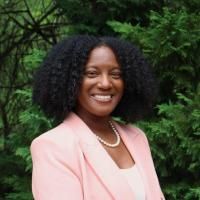
Whitney McCoy
Whitney N. McCoy is a Research Scientist at the Center for Child and Family Policy whose work is deeply community-engaged, focusing on how educational environments shape student engagement, well-being, and academic success. Her research explores STEM education, educator development, and research-driven strategies to improve K-12 learning experiences.
Her research focuses on:
- Applying advanced qualitative and mixed-methods approaches to examine educational experiences, facilitate structured focus groups, and provide research consultation on study design, data collection, and analysis to enhance educational research and practice.
- Examining how educational environments influence student well-being, engagement, and achievement, particularly in engineering and technology education—also known more broadly as STEM education.
- Designing and evaluating curriculum and professional development programs to improve K-12 education, including initiatives that strengthen educator support, workforce wellness, and student learning environments.
- Collaborating with community partners to advance engineering and technological innovation through engagement, mentorship, hands-on experiences, and research-driven strategies.
She taught K-6 in Mecklenburg and Guilford County for six years, specializing in curriculum development and student learning strategies. Before joining CCFP, she was a Postdoctoral Research Associate in STEM Education at the University of Virginia, where she oversaw a randomized control trial on computer science professional development for elementary teachers and coached educators on engineering integration.
McCoy earned a B.S. in Biology from Winston-Salem State University and an M.A. in Teaching from UNC Charlotte. She completed her Ph.D. in Teacher Education and Learning Science (Educational Psychology) at NC State University, where she received the NSF Graduate Research Fellowship, was an SREB Doctoral Scholar, and won the Outstanding Dissertation of the Year award.

Unless otherwise indicated, scholarly articles published by Duke faculty members are made available here with a CC-BY-NC (Creative Commons Attribution Non-Commercial) license, as enabled by the Duke Open Access Policy. If you wish to use the materials in ways not already permitted under CC-BY-NC, please consult the copyright owner. Other materials are made available here through the author’s grant of a non-exclusive license to make their work openly accessible.