When 7 transmembrane receptors are not G protein-coupled receptors.
Date
2005-11
Journal Title
Journal ISSN
Volume Title
Repository Usage Stats
views
downloads
Citation Stats
Abstract
Classically, 7 transmembrane receptors transduce extracellular signals by coupling to heterotrimeric G proteins, although recent in vitro studies have clearly demonstrated that they can also signal via G protein-independent mechanisms. However, the physiologic consequences of this unconventional signaling, particularly in vivo, have not been explored. In this issue of the JCI, Zhai et al. demonstrate in vivo effects of G protein-independent signaling by the angiotensin II type 1 receptor (AT1R) (see the related article beginning on page 3045). In studies of the mouse heart, they compare the physiologic and biochemical consequences of transgenic cardiac-specific overexpression of a mutant AT1R incapable of G protein coupling with those of a wild-type receptor. Their results not only provide the first glimpse of the physiologic effects of this newly appreciated mode of signaling but also provide important and previously unappreciated clues as to the underlying molecular mechanisms.
Type
Department
Description
Provenance
Subjects
Citation
Permalink
Published Version (Please cite this version)
Publication Info
Rajagopal, Keshava, Robert J Lefkowitz and Howard A Rockman (2005). When 7 transmembrane receptors are not G protein-coupled receptors. J Clin Invest, 115(11). pp. 2971–2974. 10.1172/JCI26950 Retrieved from https://hdl.handle.net/10161/5931.
This is constructed from limited available data and may be imprecise. To cite this article, please review & use the official citation provided by the journal.
Collections
Scholars@Duke
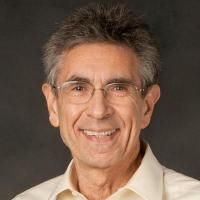
Robert J. Lefkowitz
Dr. Lefkowitz’s memoir, A Funny Thing Happened on the Way to Stockholm, recounts his early career as a cardiologist and his transition to biochemistry, which led to his Nobel Prize win.
Robert J. Lefkowitz, M.D. is Chancellor’s Distinguished Professor of Medicine and Professor of Biochemistry and Chemistry at the Duke University Medical Center. He has been an Investigator of the Howard Hughes Medical Institute since 1976. Dr. Lefkowitz began his research career in the late 1960’s and early 1970’s when there was not a clear consensus that specific receptors for drugs and hormones even existed. His group spent 15 difficult years developing techniques for labeling the receptors with radioactive drugs and then purifying the four different receptors that were known and thought to exist for adrenaline, so called adrenergic receptors. In 1986 Dr. Lefkowitz transformed the understanding of what had by then become known as G protein coupled receptors because of the way the receptor signal for the inside of a cell through G proteins, when he and his colleagues cloned the gene for the beta2-adrenergic receptor. They immediately recognized the similarity to a molecule called rhodopsin which is essentially a light receptor in the retina. This unexpected finding established the beta receptor and rhodopsin as the first member of a new family of proteins. Because each has a peptide structure, which weaves across the cell membrane seven times, these receptors are referred to as seven transmembrane receptors. This super family is now known to be the largest, most diverse and most therapeutically accessible of all the different kinds of cellular receptors. There are almost a thousand members of this receptor family and they regulate virtually all known physiological processes in humans. They include the receptors not only to numerous hormones and neurotransmitters but for the receptors which mediate the senses of sweet and bitter taste and smell amongst many others. Dr. Lefkowitz also discovered the mechanism by which receptor signaling is turned off, a process known as desensitization. Dr. Lefkowitz work was performed at the most fundamental and basic end of the research spectrum and has had remarkable consequences for clinical medicine. Today, more than half of all prescription drug sales are of drugs that target either directly or indirectly the receptors discovered by Dr. Lefkowitz and his trainees. These include amongst many others beta blockers, angiotensin receptor blockers or ARBs and antihistamines. Over the past decade he has discovered novel mechanisms by which the receptors function which may lead to the development of an entirely new class of drugs called “biased agonists”. Several such compounds are already in advanced stages of clinical testing. Dr. Lefkowitz has received numerous honors and awards, including the National Medal of Science, the Shaw Prize, the Albany Prize, and the 2012 Nobel Prize in Chemistry. He was elected to the USA National Academy of Sciences in 1988, the Institute of Medicine in 1994, and the American Academy of Arts and Sciences in 1988.

Howard Allan Rockman
Rockman Lab: Molecular Mechanisms of Hypertrophy and Heart Failure
Overall Research Direction: The major focus of this laboratory is to understand the molecular mechanisms of hypertrophy and heart failure. My laboratory uses a strategy that combines state of the art molecular techniques to generate transgenic and gene targeted mouse models, combined with sophisticated physiologic measures of in vivo cardiac function. In this manner, candidate molecules are either selectively overexpressed in the mouse heart or genes ablated followed by an in-depth analysis of the physiological phenotype. To model human cardiac disease, we have created several models of cardiac overload in the mouse using both microsurgical techniques and genetic models of cardiac dysfunction.
Areas of Research
1) Signaling: G protein-coupled receptor signaling in hypertrophy and heart failure focusing on the concept of biased signaling of 7 transmembrane receptors.
2) Molecular physiology: In depth physiological analysis of cardiac function in genetically altered mice to understand the role of G protein-coupled receptor signaling pathways on the development of heart failure in vivo.

Unless otherwise indicated, scholarly articles published by Duke faculty members are made available here with a CC-BY-NC (Creative Commons Attribution Non-Commercial) license, as enabled by the Duke Open Access Policy. If you wish to use the materials in ways not already permitted under CC-BY-NC, please consult the copyright owner. Other materials are made available here through the author’s grant of a non-exclusive license to make their work openly accessible.