Impact of Wildfire Smoke on Acute Illness.
Date
2024-10
Journal Title
Journal ISSN
Volume Title
Citation Stats
Abstract
<jats:p>Climate change increases wildfire smoke exposure. Inhaled smoke causes inflammation, oxidative stress, and coagulation, which exacerbate cardiovascular and respiratory disease while worsening obstetric and neonatal outcomes.</jats:p>
Type
Department
Description
Provenance
Subjects
Citation
Permalink
Published Version (Please cite this version)
Publication Info
Hughes, Fintan, Luke Parsons, Jerrold H Levy, Drew Shindell, Brooke Alhanti, Tetsu Ohnuma, Prasad Kasibhatla, Hugh Montgomery, et al. (2024). Impact of Wildfire Smoke on Acute Illness. Anesthesiology, 141(4). pp. 779–789. 10.1097/aln.0000000000005115 Retrieved from https://hdl.handle.net/10161/31564.
This is constructed from limited available data and may be imprecise. To cite this article, please review & use the official citation provided by the journal.
Collections
Scholars@Duke

Luke Parsons
Luke Parsons is a climate researcher and lecturer. He teaches about climate change and climate impacts and studies climate dynamics, drought, and climate change + deforestation + emissions impacts on the environment, human health, well-being, and the economy. In addition to his work as a researcher, Luke is also a Wilderness First Responder and former NOLS instructor who enjoys backpacking, climbing, and taking panoramic landscape photographs.

Jerrold Henry Levy
Jerrold Levy is Professor of Anesthesiology, Critical Care, and Surgery (Cardiothoracic) at Duke University Medical Center in Durham, NC. He obtained his medical degree from the University of Miami, where he was an intern in internal medicine, and undertook his residency in the Department of Anesthesiology of the Massachusetts General Hospital and Harvard Medical School in Boston, where he was also Chief Resident, and completed fellowships in both Respiratory ICU and Cardiac Anesthesiology. He previously was Professor, Deputy Chair for Research, and Chief of Cardiothoracic Anesthesiology at Emory University School of Medicine. His clinical and research interests include anticoagulation and its reversal, therapeutic strategies to prevent and treat coagulopathy and acute inflammatory responses in critically ill patients, clinical applications of recombinant and purified protein concentrates to treat bleeding, and pharmacologic approaches to treat shock. He is currently Chair of the Subcommittee on Perioperative and Critical Care Thrombosis and Hemostasis for the International Society of Thrombosis and Hemostasis, Executive Editor of Anesthesiology, and consultant to the FDA‘s Biologic Products Advisory Committee. He is the author of over 450 publications on PubMED, with over 100,000 citations on Google Scholar and a h-index of 95. He is also fluent in French and conversational in Spanish and Japanese.

Drew Todd Shindell
Drew Shindell is Nicholas Professor of Earth Science at Duke University. From 1995 to 2014 he was at the NASA Goddard Institute for Space Studies in New York City and taught at Columbia University. He earned his Bachelor's at UC Berkeley and PhD at Stony Brook University, both in Physics. He studies climate change, air quality, and links between science and policy. He has been an author on >250 peer-reviewed publications, received awards from Scientific American, NASA, the NSF and the EPA, and is a fellow of AGU and AAAS.
He has testified on climate issues before both houses of the US Congress (at the request of both parties), developed a climate change course with the American Museum of Natural History, and made numerous media appearances as part of his outreach efforts. He chaired the 2011 UNEP/WMO Integrated Assessment of Black Carbon and Tropospheric Ozone, and was a Coordinating Lead Author on the 2013 Fifth Assessment Report of the IPCC and on the 2018 IPCC Special Report on 1.5°C. He also chairs the Scientific Advisory Panel to the Climate and Clean Air Coalition of nations and organizations.
Brooke Alhanti
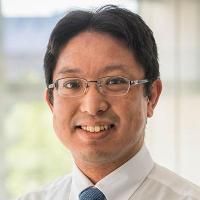
Tetsu Ohnuma
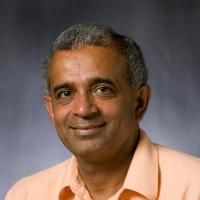
Prasad S. Kasibhatla
The overarching theme of my research is to develop a fundamental and quantitative understanding of the factors that determine the chemical composition of the atmosphere. I am particularly interested in delineating natural and anthropogenic impacts on the chemical composition of the atmosphere, and in exploring the potential for these impacts to affect natural ecosystems. My research involves the use of numerical models in conjunction with remote and insitu measurements of atmospheric composition.
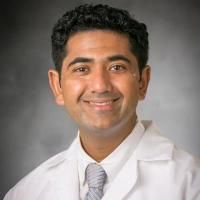
Vijay Krishnamoorthy

Unless otherwise indicated, scholarly articles published by Duke faculty members are made available here with a CC-BY-NC (Creative Commons Attribution Non-Commercial) license, as enabled by the Duke Open Access Policy. If you wish to use the materials in ways not already permitted under CC-BY-NC, please consult the copyright owner. Other materials are made available here through the author’s grant of a non-exclusive license to make their work openly accessible.