Nasally Inhaled Nitric Oxide for Sudden Right-Sided Heart Failure in the Intensive Care Unit: NO Time Like the Present.
Date
2019-03
Authors
Journal Title
Journal ISSN
Volume Title
Repository Usage Stats
views
downloads
Citation Stats
Attention Stats
Abstract
Type
Department
Description
Provenance
Subjects
Citation
Permalink
Published Version (Please cite this version)
Publication Info
Ghadimi, Kamrouz, and Sudarshan Rajagopal (2019). Nasally Inhaled Nitric Oxide for Sudden Right-Sided Heart Failure in the Intensive Care Unit: NO Time Like the Present. Journal of cardiothoracic and vascular anesthesia, 33(3). pp. 648–650. 10.1053/j.jvca.2018.10.008 Retrieved from https://hdl.handle.net/10161/29745.
This is constructed from limited available data and may be imprecise. To cite this article, please review & use the official citation provided by the journal.
Collections
Scholars@Duke

Kamrouz Ghadimi
Dr. Kamrouz (Kam) Ghadimi is an experienced cardiovascular acute care specialist (cardiovascular anesthesiology and intensive care), established investigator, physician leader, and associate professor of Anesthesiology and Critical Care at Duke Health.
His clinical practice is rooted in the cardiothoracic surgical ICU and operating rooms. He has broad expertise in all topics involving perioperative cardiovascular medicine and intensive care, including the management of acutely ill patients after surgery or those receiving extracorporeal life support (ECLS/ECMO). His specific area of expertise focuses on the enhancement of blood circulation through the lungs and the reversal of bleeding with prevention of thrombosis after surgery and circulatory life support. He has published original research, invited reviews, and guidance documents in several high-impact multidisciplinary journals and networks, including JAMA, Circulation, BMJ, Journal of the American College of Cardiology, Journal of Heart and Lung Transplantation, and Journal of Thrombosis & Haemostasis. He has also published in anesthesiology specialty journals, including Anesthesia & Analgesia, Anesthesiology, Current Opinion in Anesthesiology, and the British Journal of Anaesthesia. Dr. Ghadimi has served on the Editorial Board for the Journal of Cardiothoracic and Vascular Anesthesia since 2018 and has served as a peer reviewer for more than 30 top-medical journals worldwide.
Over his career, he has developed a global multidisciplinary network of collaborators and colleagues in academic medicine, private practice, larger healthcare systems, and offices of the federal government. He has experience with grant funding from a variety of sponsors, including federal, industry, foundation, philanthropy, and institutional sources. He also holds positions on several other national and international committees aimed at improving cardiovascular health in patients undergoing surgery and post-surgical intensive care. He is a selected task force and writing committee member of the 2024 American College of Cardiology and American Heart Association Perioperative Cardiovascular Guidelines. He has devoted the majority of his career to the service of patients requiring cardiovascular perioperative and surgical intensive care.
In addition to a doctorate in Medicine, Dr. Ghadimi holds a Bachelor’s in Economics from Boston University and a Master’s in Clinical Research from Duke University School of Medicine and the National Institutes of Health. He is also an inventor with patents/patents pending, a medical consultant, a mentor, and an investor. He is a founding member and the original academic director of True Learn, an eLearning company focused on board exam preparation for multiple medical subspecialties. This resource is used by many physicians around the country. Beyond developing an educational platform that has reached several thousand physicians and physicians-in-training, Dr. Ghadimi has formally mentored 22 pre-doctorate and post-doctorate trainees, with several mentees continuing their faculty careers in academic practice. In addition, he serves as a resource for a multitude of other physicians, physicians-in-training, and allied healthcare professionals.
Currently, Dr. Ghadimi serves as Director of the Clinical Research Unit for the Department of Anesthesiology at Duke Health, leading a cohesive, high-performing management team that oversees 45 staff working with Anesthesiology faculty and faculty in other departments to operationalize more than 80 innovative research protocols annually (single- and multi-site studies) to advance the fields of perioperative medicine, intensive care, pain management, and brain and heart health. He is leading digital health and artificial intelligence implementation in research workflow to rapidly leverage capabilities for automation and efficiency with the evolving guidance of cybersecurity compliance. He has also led the expansion of the Human Biospecimen Repository within the Department of Anesthesiology, where participants from prospective studies have generously donated biofluids and tissue for the advancement of disease-specific biology and translational research. Dr. Ghadimi is currently involved in the One Duke Gen precision medicine initiative for Duke Health to catalyze high-impact translational discoveries through expansive data-driven partnerships.
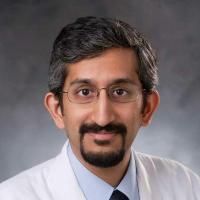
Sudarshan Rajagopal
I am a physician-scientist with a research focus on G protein-coupled receptor signaling in inflammation and vascular disease and a clinical focus on pulmonary vascular disease, as I serve as Co-Director of the Duke Pulmonary Vascular Disease Center. My research spans the spectrum from clinical research in pulmonary vascular disease, to translational research in cardiovascular disease, to the basic science of receptor signaling.
Our basic science resesarch focuses on understanding and untapping the signaling potential of G protein-coupled receptors (GPCRs) to regulate inflammation in vascular disease. GPCRs are the most common transmembrane receptors in the human genome (over 800 members) and are some of the most successful targets for drug therapies. While it has been known for some time that these receptors signal through multiple downstream effectors (such as heterotrimeric G proteins and multifunctional beta arrestin adapter proteins), over the past decade it has been better appreciated that these receptors are capable of signaling with different efficacies to these effectors, a phenomenon referred to as “biased agonism”. Ligands can be biased, by activating different pathways from one another, and receptors can be biased, by signaling to a limited number of pathways that are normally available to them. Moreover, this phenomenon also appears to be common to other transmembrane and nuclear receptors. While a growing number of biased agonists acting at multiple receptors have been identified, there is still little known regarding the mechanisms underlying biased signaling and its physiologic impact.
Much of our research focuses on the chemokine system, which consists of approximately twenty receptors and fifty ligands that display considerable promiscuity with each other in the regulation of immune cell function in inflammatory diseases. Research from our group and others have shown that many of these ligands act as biased agonists when signaling through the same receptor. We use models of inflammation such as contact hypersensitivity and pulmonary arterial hypertension (PAH). PAH is a disease of the pulmonary arterioles that results in right heart failure and most of its treatments target signaling by GPCRs. We use multiple approaches to probe these signaling mechanisms, including in-house pharmacological assays, advanced phosphoproteomics and single cell RNA sequencing.

Unless otherwise indicated, scholarly articles published by Duke faculty members are made available here with a CC-BY-NC (Creative Commons Attribution Non-Commercial) license, as enabled by the Duke Open Access Policy. If you wish to use the materials in ways not already permitted under CC-BY-NC, please consult the copyright owner. Other materials are made available here through the author’s grant of a non-exclusive license to make their work openly accessible.