Carbon Pricing Induces Innovation: Evidence from China's Regional Carbon Market Pilots
Date
2018
Authors
Journal Title
Journal ISSN
Volume Title
Repository Usage Stats
views
downloads
Citation Stats
Attention Stats
Abstract
jats:pChina has launched seven regional pilots of emission trading scheme (ETS) to limit its carbon emissions. Taking advantage of the variations in the regional ETS pilots across regions and sectors and over time, we employ a difference-in-difference-in-differences (DDD) approach to evaluate the effect of ETS on low-carbon innovation at the firm level. Using patent application data of publicly-listed firms in China between 2003 and 2015, we find that the ETS pilots induced innovation in low-carbon technologies. The more active pilots—measured by carbon price and turnover rate of allowance trading—are associated with more intense low-carbon innovation.</jats:p>
Type
Department
Description
Provenance
Subjects
Citation
Permalink
Published Version (Please cite this version)
Publication Info
Cui, Jingbo, Junjie Zhang and Yang Zheng (2018). Carbon Pricing Induces Innovation: Evidence from China's Regional Carbon Market Pilots. AEA Papers and Proceedings, 108. pp. 453–57. 10.1257/pandp.20181027 Retrieved from https://hdl.handle.net/10161/20404.
This is constructed from limited available data and may be imprecise. To cite this article, please review & use the official citation provided by the journal.
Collections
Endorsement
Review
Supplemented By
Referenced By
Scholars@Duke

Jingbo Cui
Bio: Dr. Jingbo Cui is a tenured Associate Professor of Applied Economics at the Division of Social Sciences, Co-Director at the Environmental Research Center, and Director of Graduate Studies for the International Master of Environmental Policy (iMEP) program at Duke Kunshan University, with a Secondary Faculty Appointment at the Nicholas School of the Environment at Duke University.
Dr. Cui's research centers on Environmental Economics, Climate Innovation, and the Economics of Climate Change and Policy. His recent research leverages causal inference methods, data science algorithms (e.g., LLMs and NLP), and GIS tools to explore topics such as the drivers and obstacles to global climate innovation, the economic and environmental impacts of China's climate policy, and the identification and quantification of the financial consequences of climate risks in China.
His scholarly contributions have been published in top-tier academic journals, including PNAS, AER P&P, Journal of the Association of Environmental and Resource Economists (JAERE), Journal of Environmental Economics and Management (JEEM), American Journal of Agricultural Economics, Environmental and Resource Economics, and others. He has served as a Co-Editor for Weather, Climate and Society under the American Meteorological Society, an Associate Editor for Environment and Development Economics, and a member of the editorial councils at JAERE and JEEM.
His research projects on China's Climate Policy and Climate Innovation have been funded by the NSFC of China. Nature Climate Change Highlight reports and world-leading media, including the Financial Times, Nature News in Focus, BBC Worklife, the South Chian Morning Post, and others, have covered his research and perspectives on climate policy and energy transition.
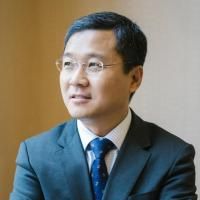
Junjie Zhang
Junjie Zhang is a professor in the Nicholas School of the Environment at Duke University and Director of the Initiative for Sustainable Investment at Duke Kunshan University. He founded and directed Duke Kunshan's Environmental Research Center and International Master of Environmental Policy Program. Before that, he was an associate professor in the School of Global Policy and Strategy at the University of California, San Diego. He was also a Volkswagen Visiting Chair in Sustainability in Schwarzman College at Tsinghua University. His recent research focuses on empirical issues in energy transition, climate change, and green finance. He has received funding from various sources, including scientific foundations, multilateral banks, corporations, financial institutions, and philanthropic foundations. He holds a B.S. from the Renmin University of China, a B.S. and an M.S. from Tsinghua University, and a Ph.D. from Duke University.

Unless otherwise indicated, scholarly articles published by Duke faculty members are made available here with a CC-BY-NC (Creative Commons Attribution Non-Commercial) license, as enabled by the Duke Open Access Policy. If you wish to use the materials in ways not already permitted under CC-BY-NC, please consult the copyright owner. Other materials are made available here through the author’s grant of a non-exclusive license to make their work openly accessible.