Seven unconfirmed ideas to improve future ICU practice.
Date
2017-12-28
Journal Title
Journal ISSN
Volume Title
Repository Usage Stats
views
downloads
Citation Stats
Attention Stats
Abstract
With imprecise definitions, inexact measurement tools, and flawed study execution, our clinical science often lags behind bedside experience and simply documents what appear to be the apparent faults or validity of ongoing practices. These impressions are later confirmed, modified, or overturned by the results of the next trial. On the other hand, insights that stem from the intuitions of experienced clinicians, scientists and educators-while often neglected-help place current thinking into proper perspective and occasionally point the way toward formulating novel hypotheses that direct future research. Both streams of information and opinion contribute to progress. In this paper we present a wide-ranging set of unproven 'out of the mainstream' ideas of our FCCM faculty, each with a defensible rationale and holding clear implications for altering bedside management. Each proposition was designed deliberately to be provocative so as to raise awareness, stimulate new thinking and initiate lively dialog.
Type
Department
Description
Provenance
Subjects
Citation
Permalink
Published Version (Please cite this version)
Publication Info
Marini, John J, Daniel De Backer, Can Ince, Mervyn Singer, Frank Van Haren, Martin Westphal and Paul Wischmeyer (2017). Seven unconfirmed ideas to improve future ICU practice. Crit Care, 21(Suppl 3). p. 315. 10.1186/s13054-017-1904-x Retrieved from https://hdl.handle.net/10161/15998.
This is constructed from limited available data and may be imprecise. To cite this article, please review & use the official citation provided by the journal.
Collections
Scholars@Duke
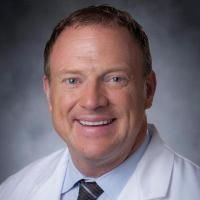
Paul Edmund Wischmeyer
Paul Wischmeyer M.D., EDIC, FASPEN, FCCM is a nutrition, exercise, critical care, and perioperative physician-researcher who specializes in enhancing preparation and recovery from surgery, critical care and COVID-19. He serves as a Tenured Professor of Anesthesiology and Surgery at Duke. He also serves as the Associate Vice Chair for Clinical Research in the Dept. of Anesthesiology and Director of the TPN/Nutrition Team at Duke. Dr. Wischmeyer earned his medical degree with honors at The University of Chicago Pritzker School of Medicine, where he was elected into the honor society of Alpha Omega Alpha for outstanding academic achievement. He completed his pediatric internship at University of Colorado Children’s Hospital and his anesthesiology/critical care residency training at the University of Chicago. He also completed a Clinical Pharmacology fellowship and the NIH K30 Clinical Research Scientist Training Program while at University of Chicago.
Dr. Wischmeyer’s clinical and research focus is in critical care, perioperative care exercise, and nutrition to help patients prepare and recover from illness and surgery. His research interests include surgical and ICU nutrition and exercise rehabilitation; role of parenteral, enteral, and oral nutrition to improve patient outcomes; perioperative optimization; post-illness muscle mass and functional recovery; and probiotics/microbiome. His research interests have also recently been focused on COVID-19 research into COVID-19 metabolism, role of probiotics in COVID19 prevention and treatment, and exercise and nutrition programs to recover from COVID-19 and Long COVID-19. Dr. Wischmeyer’s research group has been awarded multiple NIH, DOD, and other peer reviewed grants to perform research ranging from basic mechanistic cell work to large-scale multi-center clinical trials in the fields of critical care, perioperative medicine, nutrition, illness metabolism, microbiome/probiotics, and exercise interventions to improve functional outcomes. For his research work and clinical work, Dr. Wischmeyer has received numerous awards from national and international societies including, The Jeffrey Silverstein Award and Memorial Lecture for Humanism in Medicine from the American Delirium Society, The John M. Kinney Award for the most significant contribution to field of general nutrition, the Stanley Dudrick Research Scholar Award by the American Society for Parenteral and Enteral Nutrition and The Lifetime Achievement Award of the International Parenteral Nutrition Society (IPENEMA) for significant contributions to the field of nutrition. Dr. Wischmeyer has over 200 peer-reviewed publications in critical care, anesthesiology, and nutrition, including in the New England Journal of Medicine. Finally, he has been an invited speaker at numerous national and international medical meetings delivering over 900 invited presentations over his career. He has an H-index of 73 with over 16,500 citations to his work, including 1 publication with > 1000 citations and 55 publications with > 100 citations. He is also the founder and director of the Duke Online Clinical Nutrition Fellowship, an international fellowship to provide clinical nutrition training to healthcare providers worldwide, as well as unique scholarship opportunities for healthcare providers in developing nations.
Dr. Wischmeyer passion for helping patients recover from illness and surgery arises from his personal experiences as both doctor and patient in the ICU. Dr. Wischmeyer has undergone over 27 major surgeries and personally experienced multiple ICU stays due to a childhood GI illness that took more than half of his intestinal tract. Thus, preparation for surgery/critical care and recovery from illness are a way of life for Dr. Wischmeyer that he is passionate about teaching his patients and other caregivers worldwide.

Unless otherwise indicated, scholarly articles published by Duke faculty members are made available here with a CC-BY-NC (Creative Commons Attribution Non-Commercial) license, as enabled by the Duke Open Access Policy. If you wish to use the materials in ways not already permitted under CC-BY-NC, please consult the copyright owner. Other materials are made available here through the author’s grant of a non-exclusive license to make their work openly accessible.